
There is a quote from the author Chesterton that can serve as a key to understanding everything I would like to share with you: “Take away the supernatural, and what remains is the unnatural” (cf. Heretics, VI). Man is not made to live closed in on himself, but in a living relationship with God. When that relationship is obscured or weakened, life begins to fall into disorder from within. The unnatural is not only the scandalous; it is enough to live without God in daily life, leaving him out of the criteria and decisions with which we face existence.
And if this is true for every Christian, it is particularly serious on the path of formation towards the priesthood. What could be more unnatural than a seminarian or priest who speaks of God with familiarity but lives inwardly as if God’s presence existed only in words and not in the depth of life? Nothing would be more dangerous than becoming accustomed to the things of God without living from God. That is why, ultimately, everything begins—and always returns—to a living and concrete relationship with the One who has chosen us without any merit on our part.
Having a supernatural view does not mean fleeing from reality, but learning to recognize God’s action in the concrete reality of each day; a vision that cannot be improvised or delegated, but must be learned and exercised in the ordinary course of life. Precisely for this reason, if supernatural view is so decisive for Christian life, it is even more so for those who will act in persona Christi, and from the formative stage onwards it deserves to be nurtured with special attention, because it is the principle that gives unity to everything else.
This believing outlook on reality needs to be translated every day into concrete choices in life; otherwise, even intrinsically good practises – such as study, prayer, community life – can become empty and distorted, becoming mere fulfilment. A simple and proven way to safeguard this view is to practise the presence of God, [1]17th century French monk, Brother Lawrence, often forgot the presence of God, making many mistakes along the way. But he would say, “There I go again, Lord, I have forgotten You and done my own thing. Please forgive me.” And then he would rest again in the presence and will of God, rather than spend any more time bemoaning his frailty. It takes great humility to stop looking at how imperfect one is! His practice of being in God’s presence was not limited to when he was undisturbed, but…”holding with Him at all times and at every moment humble and loving converse, without set rule or stated method, in all time of our temptation and tribulation, in all time of our dryness of soul and disrelish of God, yes, and even when we fall into unfaithfulness and actual sin.” (Brother Lawrence, The Practice of the Presence of God, Spiritual Maxims, p. 70-71, Spire Books) which keeps the heart awake and life constantly focused on Him.
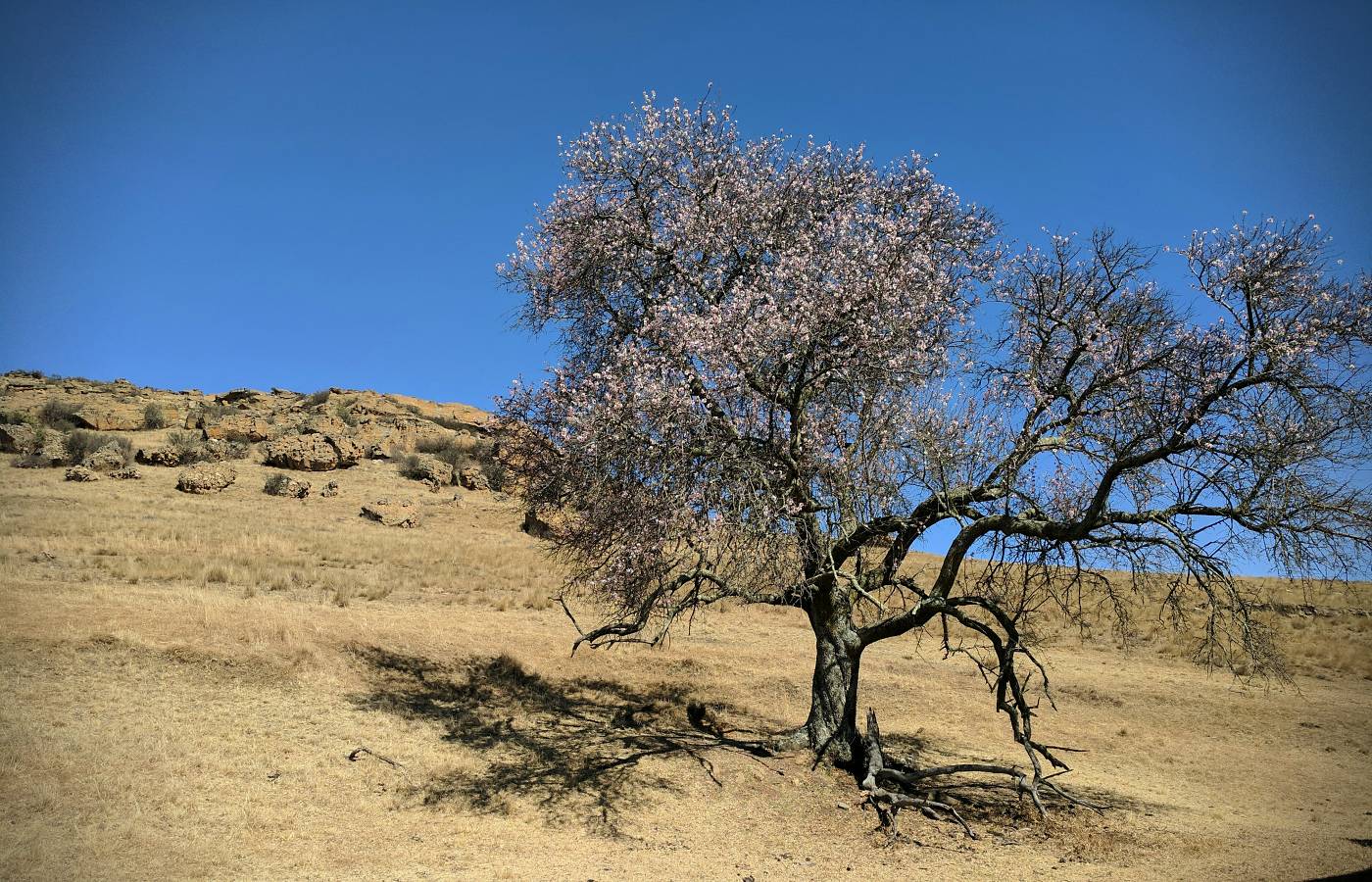
Sacred Scripture expresses this truth with a simple image in the first psalm, when it describes the righteous as “a tree planted by streams of water, that yields its fruit in its season, and its leaf does not wither” (v. 3). It is not fruitful because of an absence of difficulties, but because of the place where it has taken root. Wind, winter, drought, and pruning are all part of its growth, but neither storm nor drought can destroy it when its roots are deep and close to the source. Scripture itself, however, recognizes the paradox of the fig tree that does not bear fruit despite the care it receives (cf. Lk 13:6-9).
It is said that trees “die standing”: they remain upright, they retain their appearance, but inside they are already dry. Something similar can happen in the life of a seminary or of a seminarian — and later in the life of a priest – when fruitfulness is mistaken for the intensity of activities or with merely external care for appearances. Spiritual life does not bear fruit because of what is visible, but because of what is deeply rooted in God. When that root is neglected, everything ends up drying up inside, until, silently, it ends up “dying standing upright”.
Deep down, the supernatural gaze springs from the simplest and most decisive aspect of vocation: being with the Master. Jesus called those he wanted “to be with him” (Mk 3:14). That is the foundation of all priestly formation: staying with Him and allowing oneself to be formed from within; seeing God at work and recognizing how He works in one’s own life and in that of His people. Therefore, although human means, psychology and formative tools are valuable and necessary, they cannot replace this relationship. The true agent of this journey is the Holy Spirit, who shapes the heart, teaches us to respond to grace and prepares us for a fruitful life in the service of the Church. Everything begins now, in the ordinary routine of each day, where each one decides whether to remain with the Lord or to try to sustain oneself by one’s own strength alone. —February 28, 2026, vatican.va
Related Reading
The Necessity of the Interior Life
Personal Relationship With Jesus

Footnotes
| ↑1 | 17th century French monk, Brother Lawrence, often forgot the presence of God, making many mistakes along the way. But he would say, “There I go again, Lord, I have forgotten You and done my own thing. Please forgive me.” And then he would rest again in the presence and will of God, rather than spend any more time bemoaning his frailty. It takes great humility to stop looking at how imperfect one is! His practice of being in God’s presence was not limited to when he was undisturbed, but…”holding with Him at all times and at every moment humble and loving converse, without set rule or stated method, in all time of our temptation and tribulation, in all time of our dryness of soul and disrelish of God, yes, and even when we fall into unfaithfulness and actual sin.” (Brother Lawrence, The Practice of the Presence of God, Spiritual Maxims, p. 70-71, Spire Books) |
|---|
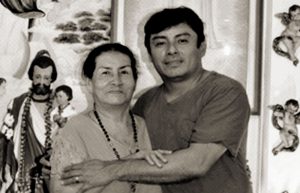
 Alicja Lenczewska

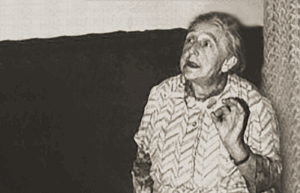 Elizabeth Kindelmann
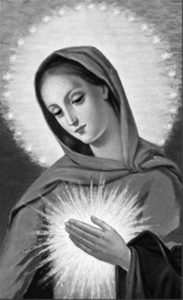 Through what became The Spiritual Diary, Jesus and Mary taught Elizabeth, and they continue to instruct the faithful in the divine art of suffering for the salvation of souls. Tasks are assigned for each day of the week, which involve prayer, fasting, and night vigils, with beautiful promises attached to them, laced with special graces for priests and the souls in purgatory. In their messages, Jesus and Mary say that The Flame of Love of the Immaculate Heart of Mary is the greatest grace given to mankind since the Incarnation. And in the not-so-distant future, her flame will engulf the entire world.
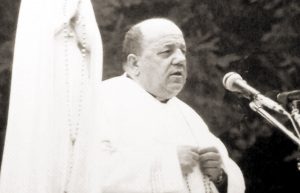 Father Stefano Gobbi
 Why Gisella Cardia?
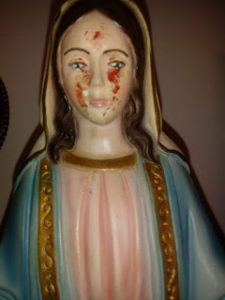 Thirdly, the messages have frequently been accompanied by visible phenomena, photographic evidence found in In Cammino con Maria, which cannot be the fruit of subjective imagination, notably the presence of the stigmata on Giselle’s body and and the appearance of crosses or religious texts in blood on Gisella’s arms. See the pictures taken from her apparition website
 Jennifer
 Why Manuela Strack?
 Why the Visionaries of Our Lady of Medjugorje?
 Why Pedro Regis?
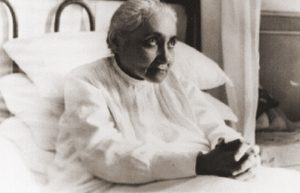 Why the Servant of God Luisa Piccarreta?
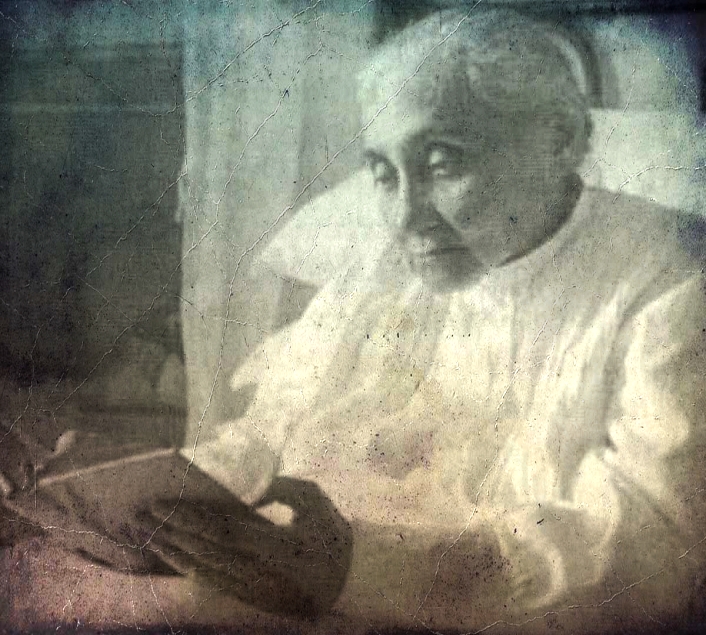 of the saints. It wasn’t until she became a “Daughter of Mary” that the nightmares finally ceased at the age of eleven. In the following year, Jesus began to speak interiorly to her especially after receiving Holy Communion. When she was thirteen, He appeared to her in a vision that she witnessed from the balcony of her home. There, in the street below, she saw a crowd and armed soldiers leading three prisoners; she recognized Jesus as one of them. When He arrived beneath her balcony, He raised his head and cried out: “Soul, help Me!” Deeply moved, Luisa offered herself from that day on as a victim soul in expiation for the sins of mankind.
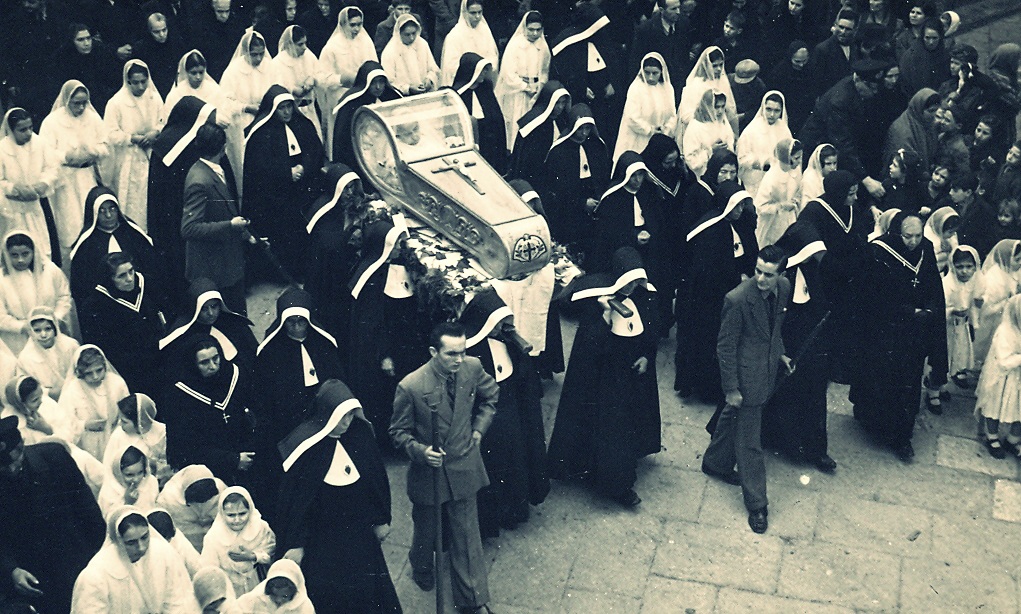 immobile, rigid-like state that appeared almost as if she were dead. It was only when a priest made the sign of the Cross over her body that Luisa regained her faculties. This remarkable mystical state persisted until her death in 1947—followed by a funeral that was no little affair. During that period in her life, she suffered no physical illness (until she succumbed to pneumonia at the end) and she never experienced bedsores, despite being confined to her little bed for sixty-four years.
 Why Simona and Angela?
 Valeria Copponi