
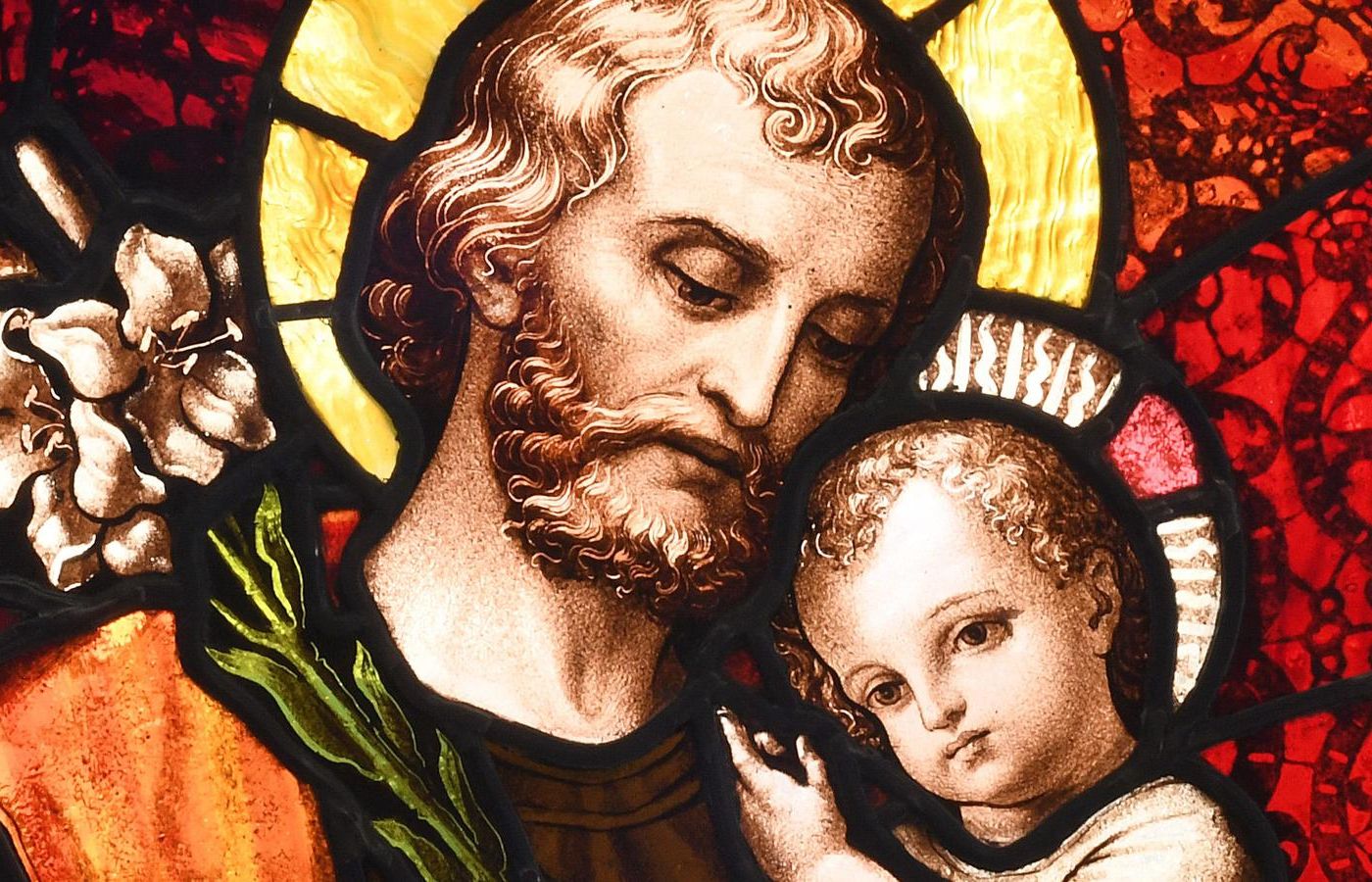
Jesus to Little Mary on March 19, 2024 the Feast of St. Joseph:
“The Fatherhood of Joseph” (Mass readings: 2 Sam. 7:4-16, Ps 88, Rom 4:13-22, Mt 1:16-24)
My little Mary, [today] you celebrate Saint Joseph and in him, fatherhood, which was admirably lived out by Joseph. His earthly fatherhood was a reflection of the divine fatherhood. Behold, the Most Holy Creator is the Father of your creation, in which He gave you life and sustains you in your existence, but there are those who become fathers not by direct bloodline, but by grace, as stated in the second reading; it is through his faith that Abraham was credited with fatherhood over multitudes of generations. This was similarly expressed with the prophets and saints who participated by their faith in a spiritual fatherhood, with many people becoming their descendants.
How much more was this plan realized in Saint Joseph, as it was not by blood, but by grace given by the Eternal One that he lived out his extraordinary fatherhood of the Son of God, participating in it in a holy way, even if an unfathomable mystery was revealed before him in the divine motherhood of Mary. This he initially faced in a great spiritual struggle in which God came to the rescue with the vision of the angel, who revealed the plan of the incarnation to him. And Joseph did not draw back faced with the supreme will of the Most High, placing himself completely at the service of the task entrusted to him, even if the commitment was an arduous one – what a responsibility it was to undertake the care, protection and support of the Most Holy Mother, his spouse, and of a Divine Son.
What would Joseph not face – what hardships and persecutions! He defended and protected Me at the risk of his life. What did he not do in his great poverty to meet My needs and those of My mother, depriving himself of food to be able to sustain us? With what dedication he carried out his work: he was diligent and hardworking, and how great was the value of his production, despite his being so poorly paid and exploited.
Joseph, the only person that the Most Holy Father allowed and wanted to be at the place of My birth and in whose arms I was welcomed after those of My Mother. It is he who makes Me incarnate[1]This can be read in two ways, either with regard to Joseph’s historical role in Jesus’s upbringing, or as the affirmation that Joseph’s paternal love is an embodiment of Christ’s own paternal love for humanity. Translator’s note. in his truly paternal love for Me – he feels that I am his son, and so I am. He introduces Me to the art of carpentry with such care and diligence. It is he who in the evening, before putting Me to rest in his arms, teaches Me the Holy Scriptures and sings praises to the Most High.
What did he not do out of generosity to help the poor?
Joseph contained within himself the compendium of all virtues.
He was always beside Me, My guardian, accompanying Me until My adulthood when, having fulfilled his task, struck by illness, he would still offer himself to the Holy Father in order to support Me in My work of redemption. And I would not enter public life as long as Joseph needed Me. I was by his side, guarding him and assisting him even in his primary personal needs, at the service of his poor, human infirmity, also in order to help in the light of the need to preserve My Most Holy Mother’s decorum and modesty.
To whom did he give his final kiss, after having said farewell to his holy spouse, to whom did he address his last sigh in My arms, if not to Me? What was his sigh if not: “My son”? No father has ever loved a son as Joseph loved Me, not only in My humanity, but above all as divine. And no son has loved a human father as I loved Joseph.
Go to him, consecrate yourselves to his good, holy and just heart. And just as he took care of the Holy Family, he will take care of you, he will not abandon you, he will make provision in your difficulties, he will make your trials less burdensome, he will help you and support you on your difficult path. He will be and act as your father, guarding you under his mantle.
Joseph is a man of few words but his thoughts are always raised up to God, his heart loves intensely and his hands are always at work to help. Give yourselves to him and you will not be lost. If all fathers consecrated themselves to Joseph, they would receive the balance, wisdom and dedication that he lived out, offering an experience of love that will bear fruit in their children.
In Heaven, Joseph, in his profound humility, still almost withdraws into the background, but the Lord God always recalls his triumph. I am the Son of my Father in Heaven, but in My heart Joseph is also My father in My humanity. In his joy, he pours out his whole tenderness upon the blessed who honored him on earth and were devoted to him.
I bless you.

Footnotes
| ↑1 | This can be read in two ways, either with regard to Joseph’s historical role in Jesus’s upbringing, or as the affirmation that Joseph’s paternal love is an embodiment of Christ’s own paternal love for humanity. Translator’s note. |
|---|


 Alicja Lenczewska

 Elizabeth Kindelmann
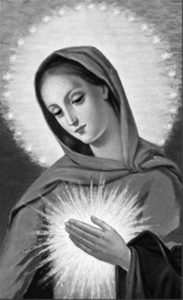 Through what became The Spiritual Diary, Jesus and Mary taught Elizabeth, and they continue to instruct the faithful in the divine art of suffering for the salvation of souls. Tasks are assigned for each day of the week, which involve prayer, fasting, and night vigils, with beautiful promises attached to them, laced with special graces for priests and the souls in purgatory. In their messages, Jesus and Mary say that The Flame of Love of the Immaculate Heart of Mary is the greatest grace given to mankind since the Incarnation. And in the not-so-distant future, her flame will engulf the entire world.
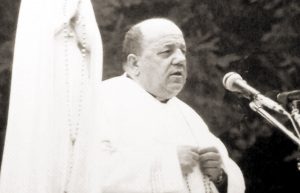 Father Stefano Gobbi
 Why Gisella Cardia?
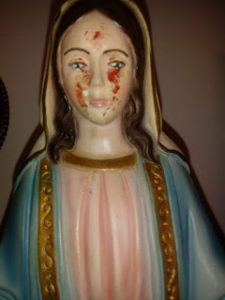 Thirdly, the messages have frequently been accompanied by visible phenomena, photographic evidence found in In Cammino con Maria, which cannot be the fruit of subjective imagination, notably the presence of the stigmata on Giselle’s body and and the appearance of crosses or religious texts in blood on Gisella’s arms. See the pictures taken from her apparition website
 Jennifer
 Why Manuela Strack?

 Why the Visionaries of Our Lady of Medjugorje?
 Why Pedro Regis?
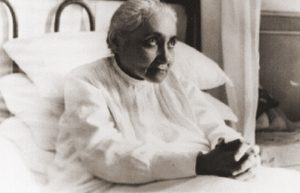 Why the Servant of God Luisa Piccarreta?
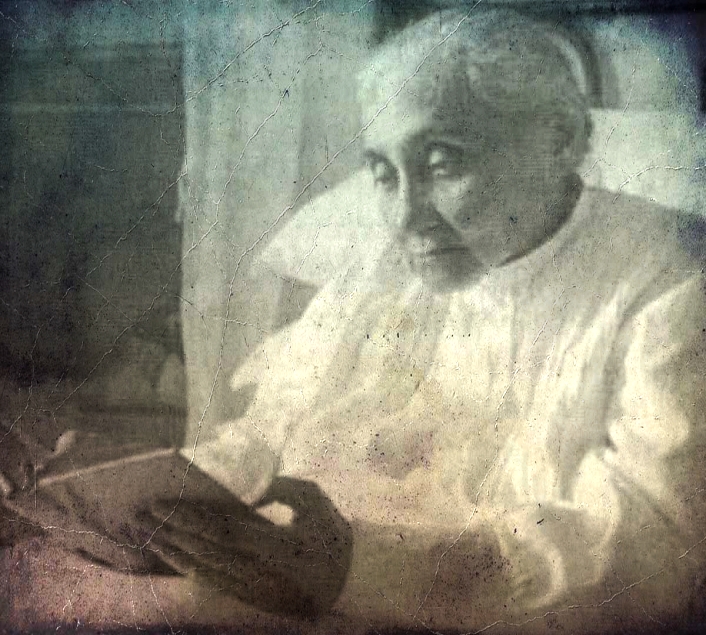 of the saints. It wasn’t until she became a “Daughter of Mary” that the nightmares finally ceased at the age of eleven. In the following year, Jesus began to speak interiorly to her especially after receiving Holy Communion. When she was thirteen, He appeared to her in a vision that she witnessed from the balcony of her home. There, in the street below, she saw a crowd and armed soldiers leading three prisoners; she recognized Jesus as one of them. When He arrived beneath her balcony, He raised his head and cried out: “Soul, help Me!” Deeply moved, Luisa offered herself from that day on as a victim soul in expiation for the sins of mankind.
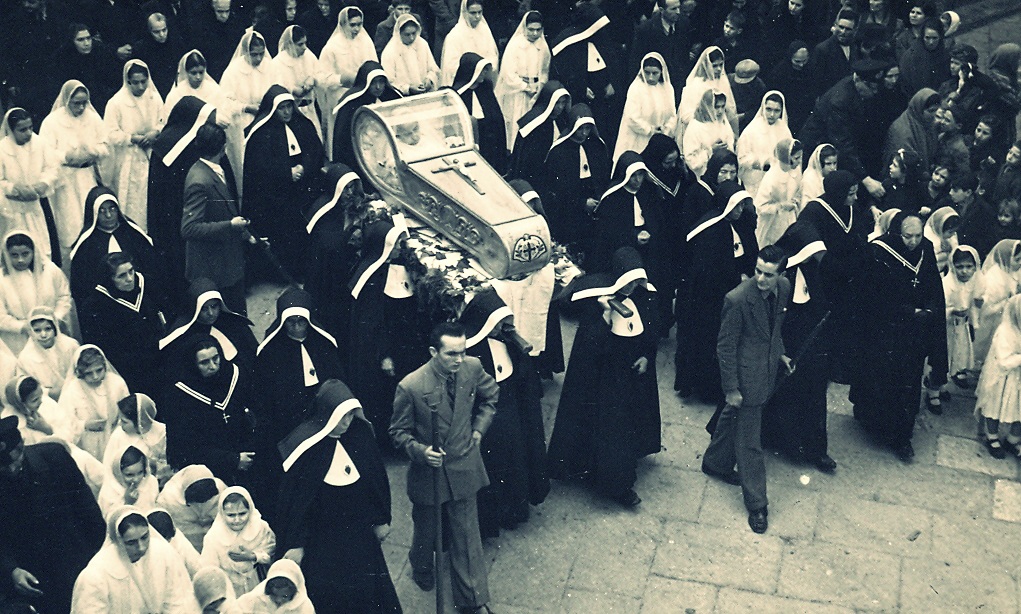 immobile, rigid-like state that appeared almost as if she were dead. It was only when a priest made the sign of the Cross over her body that Luisa regained her faculties. This remarkable mystical state persisted until her death in 1947—followed by a funeral that was no little affair. During that period in her life, she suffered no physical illness (until she succumbed to pneumonia at the end) and she never experienced bedsores, despite being confined to her little bed for sixty-four years.
 Why Simona and Angela?
 Valeria Copponi