

“Where are you going, humanity?”, the title of the document asks. In a review of the text, Daniel Esparza for Aleteia writes:
Throughout the text, the commission directly critiques two intellectual currents gaining influence in tech circles: transhumanism and posthumanism.
Transhumanism proposes that science and technology should be used to overcome biological limits — even death itself. The Vatican theologians warn that this mindset often carries an uncritical faith in progress and a subtle rejection of the human condition as it exists.
Posthumanism, meanwhile, goes further by questioning whether the human person should remain the center of moral and social life. The document points to visions of hybrid human-machine beings and fluid boundaries between people and technology.
According to the commission, these movements risk creating an illusion of salvation through technology — a promise historically reserved for religion. —March 6, 2026, aleteia.org
This qualifies for the deception of Antichrist, who according to St. Paul:
…opposes and exalts himself above every so-called god and object of worship, so as to seat himself in the temple of God, claiming that he is a god… (2 Thessalonians 2:4)
On this point, Professor Yuval Noah Harari, a top advisor to the WEF who declared that “God is dead”,[2]cf. YouTube couldn’t have been clearer:
In seeking bliss and immortality humans are in fact trying to upgrade themselves into gods. —Yuval Noah Harari, The Guardian, March 19, 2017 from his book Homo Deus
He said that Christianity is simply a myth and that Homo sapiens are a “post-truth species.”
With the help of novel technologies, within a few centuries or even decades, Sapiens will upgrade themselves into completely different beings, enjoying godlike qualities and abilities. —from Sapiens: A Brief History of Humankind (2015); cf. lifesitenews.com
It is the fusion of these technologies and their interaction across the physical, digital and biological domains that make the fourth industrial revolution fundamentally different from previous revolutions. —Prof. Klaus Schwab, founder World Economic Forum, “The Fourth Industrial Revolution”, p. 12
Esparza notes:
The digital sphere has already begun reshaping religious life in unexpected ways. The commission observes the rise of what it calls “digital religions”: online spiritual practices, virtual blessings, algorithm-driven spirituality, and personalized beliefs assembled through search engines and social media.
These trends, the theologians argue, risk turning faith into a customizable product — even encouraging the creation of a “virtual god” shaped by individual preferences. —Ibid.
In a prophetic homily, Pope Benedict XIV had warned that humanity is essentially creating a new “tower of Babel”:
But what is Babel? It is the description of a kingdom in which people have concentrated so much power they think they no longer need depend on a God who is far away. They believe they are so powerful they can build their own way to heaven in order to open the gates and put themselves in God’s place. But it’s precisely at this moment that something strange and unusual happens. While they are working to build the tower, they suddenly realise they are working against one another. While trying to be like God, they run the risk of not even being human – because they’ve lost an essential element of being human: the ability to agree, to understand one another and to work together… Progress and science have given us the power to dominate the forces of nature, to manipulate the elements, to reproduce living things, almost to the point of manufacturing humans themselves. In this situation, praying to God appears outmoded, pointless, because we can build and create whatever we want. We don’t realise we are reliving the same experience as Babel. —POPE BENEDICT XVI, Pentecost Homily, May 27th, 2012
Related Reading
—Mark Mallett

Footnotes
| ↑1 | cf. These Times of Antichrist |
|---|---|
| ↑2 | cf. YouTube |
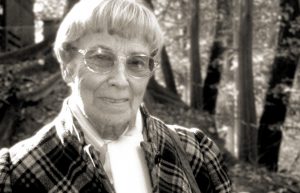 Alicja Lenczewska

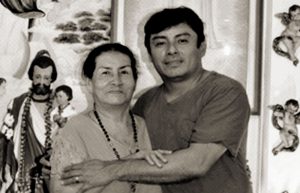
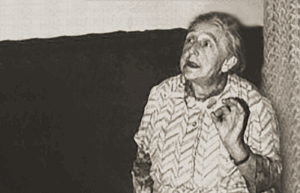 Elizabeth Kindelmann
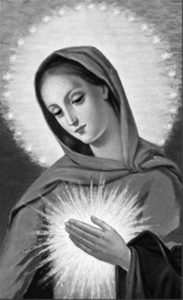 Through what became The Spiritual Diary, Jesus and Mary taught Elizabeth, and they continue to instruct the faithful in the divine art of suffering for the salvation of souls. Tasks are assigned for each day of the week, which involve prayer, fasting, and night vigils, with beautiful promises attached to them, laced with special graces for priests and the souls in purgatory. In their messages, Jesus and Mary say that The Flame of Love of the Immaculate Heart of Mary is the greatest grace given to mankind since the Incarnation. And in the not-so-distant future, her flame will engulf the entire world.
 Father Stefano Gobbi
 Why Gisella Cardia?
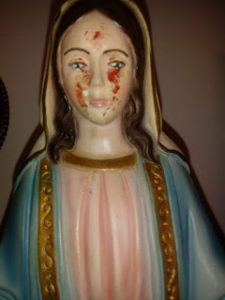 Thirdly, the messages have frequently been accompanied by visible phenomena, photographic evidence found in In Cammino con Maria, which cannot be the fruit of subjective imagination, notably the presence of the stigmata on Giselle’s body and and the appearance of crosses or religious texts in blood on Gisella’s arms. See the pictures taken from her apparition website
 Jennifer
 Why Manuela Strack?
 Why the Visionaries of Our Lady of Medjugorje?
 Why Pedro Regis?
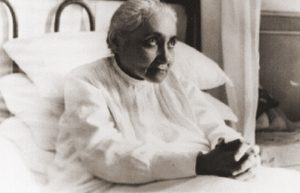 Why the Servant of God Luisa Piccarreta?
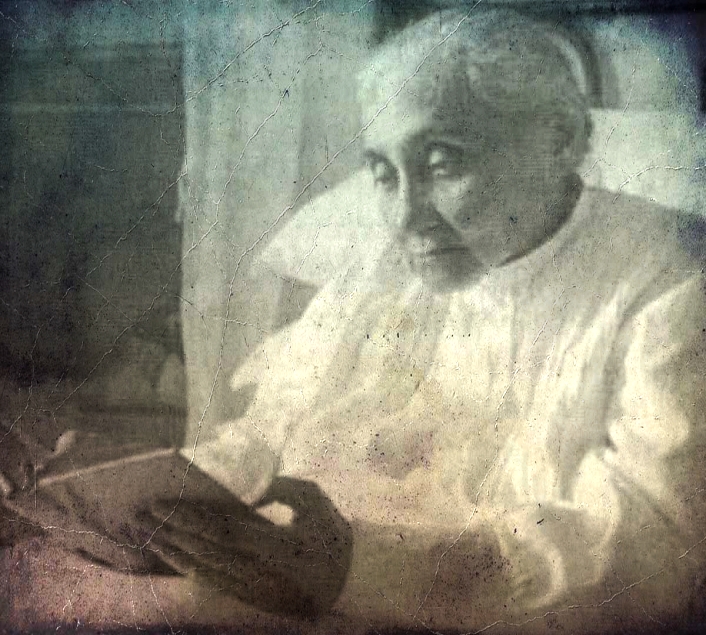 of the saints. It wasn’t until she became a “Daughter of Mary” that the nightmares finally ceased at the age of eleven. In the following year, Jesus began to speak interiorly to her especially after receiving Holy Communion. When she was thirteen, He appeared to her in a vision that she witnessed from the balcony of her home. There, in the street below, she saw a crowd and armed soldiers leading three prisoners; she recognized Jesus as one of them. When He arrived beneath her balcony, He raised his head and cried out: “Soul, help Me!” Deeply moved, Luisa offered herself from that day on as a victim soul in expiation for the sins of mankind.
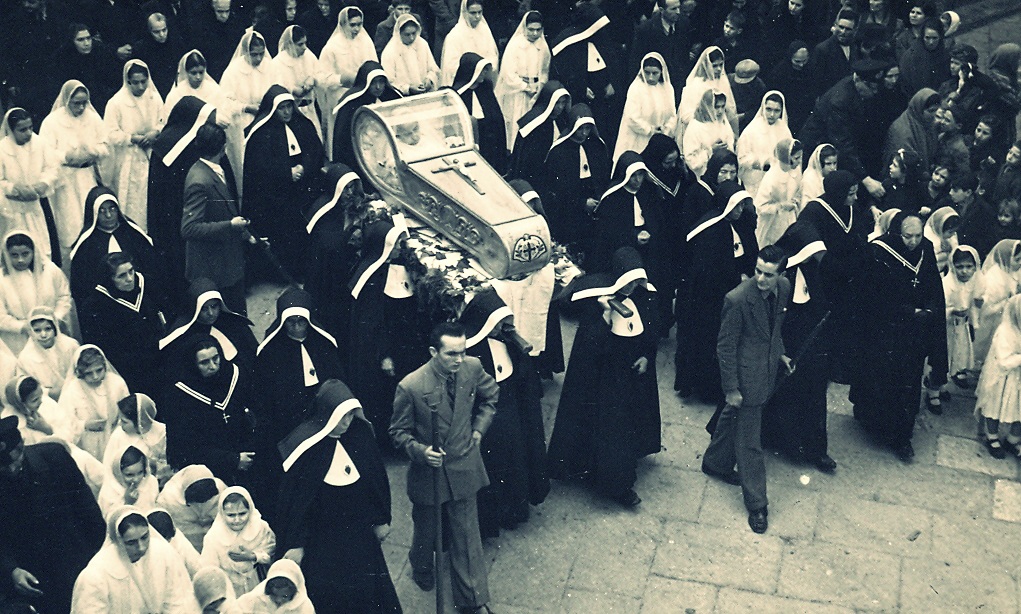 immobile, rigid-like state that appeared almost as if she were dead. It was only when a priest made the sign of the Cross over her body that Luisa regained her faculties. This remarkable mystical state persisted until her death in 1947—followed by a funeral that was no little affair. During that period in her life, she suffered no physical illness (until she succumbed to pneumonia at the end) and she never experienced bedsores, despite being confined to her little bed for sixty-four years.
 Why Simona and Angela?
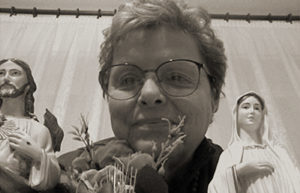 Valeria Copponi