

St. Stephen is considered the “first martyr” of the nascent Church. We think of him, of course, as one of the great disciples of early Christianity — and he was. But in truth, his life was very simple: he was one of the seven chosen to serve at table so that the Apostles could preach the Gospel.
“Brothers, select from among you seven reputable men, filled with the Spirit and wisdom, whom we shall appoint to this task, whereas we shall devote ourselves to prayer and to the ministry of the word.” The proposal was acceptable to the whole community, so they chose Stephen, a man filled with faith and the Holy Spirit… (Acts 6:3-5)
Well, that should be encouraging because Stephen could be any one of us… mothers, fathers, siblings, waitresses, nurses, care-givers, etc. We often think of the martyrs as these giants whom we can never imitate. But in fact, wasn’t the very life of Our Lady and Jesus, for the most part, the hidden “martyrdom” of their daily routine in Nazareth? Mysteriously, through the duty of the moment, Jesus was already saving souls with each shaving of wood that fell to the ground in his foster-father’s workshop. With each pass of the broom, Our Blessed Mother swept souls into the Sacred Heart of her Son — His first co-worker in the Kingdom of the Divine Will. What a martyrdom it was to remain hidden and waiting all those years knowing that the Cross — the Cross! — was His destiny that would ultimately liberate sinners.
But I know what you’re thinking: “Well, I can sweep the floor for souls, yes; and I can offer my daily work to Christ, even my present sufferings. But I am paralyzed with fear at the prospect of true martyrdom at the hands of torturers!” Sure enough, the messages you read on this website speak of a coming worldwide persecution under a kind of neo-Communism that is clearly spreading across the globe at “warp speed”.[1]cf. The Caduceus Key and Isaiah’s Prophecy of Global Communism They speak of the Passion of the Church, of schism, of great tribulation for those who remain faithful to the Gospel. And some readers may become very afraid.
Those who challenge this new paganism are faced with a difficult option. Either they conform to this philosophy or they are faced with the prospect of martyrdom. —Servant of God Fr. John Hardon (1914-2000), How to Be a Loyal Catholic Today? By Being Loyal to the Bishop of Rome; www.therealpresence.org
I wish to invite young people to open their hearts to the Gospel and become Christ’s witnesses; if necessary, His martyr-witnesses, at the threshold of the Third Millennium. —ST. JOHN PAUL II to the youth, Spain, 1989
It would be a lie to say that you will be spared from all suffering in this present and coming Storm. All of us, all of us, are going to be touched in the flesh by this to one degree or another. And even though the existence of physical “refuges” are confirmed in several prophetic revelations, Scripture, and Tradition,[2]cf. The Refuge for Our Times and Are There Physical Refuges it does not mean that you or I may not be admitted to the glorious path of actual martyrdom. But this possibility is what is keeping some of you up late at night.
 So how do we understand the promises of Sacred Scripture such as these?:
The souls of the righteous are in the hand of God, and no torment shall touch them. (Wisdom 3:1)
You will be hated by all because of my name, but not a hair on your head will be destroyed. By your perseverance you will secure your lives. (Luke 21:17-19)
“Scripture must be interpreted in the context of the living tradition of the whole Church” said Pope Benedict.[3]Address to the Participants in the Plenary Assembly of the Pontifical Biblical Commission, April 23rd, 2009; vatican.va So clearly, in a Church whose history has been paved with the blood of martyrs, these texts refer primarily to the soul. That ultimately — and most importantly — God will keep the torments that would tempt one to apostasize from reaching one’s spirit.
I am reminded of one of the novels of the great Canadian author, Michael D. O’Brien. In one of the scenes where a priest is being tortured by the authorities, O’Brien describes how the priest descends, as it were, into a place of tranquility in his spirit that his captors could not touch. Though the scene is fictional, it was burned onto my soul like an absolute truth. Indeed, in reality, that story has been repeated throughout the decades and centuries time and again. God gives grace to His suffering servants when they need it, not a moment too soon nor a moment too late.
Thus we may say with confidence: “The Lord is my helper, I will not be afraid. What can anyone do to me?” Remember your leaders [St. Stephen] who spoke the word of God to you. Consider the outcome of their way of life and imitate their faith. Jesus Christ is the same yesterday, today, and forever. (Heb 13:6-8)
…they were infuriated, and they ground their teeth at him. But Stephen, filled with the Holy Spirit, looked up intently to heaven and saw the glory of God and Jesus standing at the right hand of God… (Acts 7:54-55)
If you lie on your pillow at night replaying all the ways that you could die for Christ, of course, you’re going to work yourself up into an anxious frenzy. Why? Because you don’t have the grace for such a thing at that moment, or as Jesus puts it: “Do not worry about tomorrow; tomorrow will take care of itself. Sufficient for a day is its own evil.” [4]Matthew 6:34 In other words, God will supply what is needed for tomorrow when tomorrow comes.
Where evil abounds, grace abounds all the more. (cf. Rom 5:20)
And thus, you need to make the words of today’s Psalm your own — a true prayer of trust and resignation before the God who loves you and who has counted the very hairs of your head.
Into your hands I commend my spirit… My trust is in the Lord… Let your face shine upon your servant; save me in your kindness. You hide them in the shelter of your presence… (Psalm 31)
—Mark Mallett
Related Reading

Footnotes
| ↑1 | cf. The Caduceus Key and Isaiah’s Prophecy of Global Communism |
|---|---|
| ↑2 | cf. The Refuge for Our Times and Are There Physical Refuges |
| ↑3 | Address to the Participants in the Plenary Assembly of the Pontifical Biblical Commission, April 23rd, 2009; vatican.va |
| ↑4 | Matthew 6:34 |
 Alicja Lenczewska
 Elizabeth Kindelmann
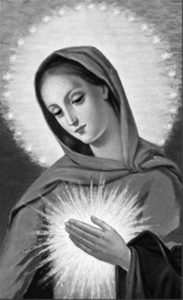 Through what became The Spiritual Diary, Jesus and Mary taught Elizabeth, and they continue to instruct the faithful in the divine art of suffering for the salvation of souls. Tasks are assigned for each day of the week, which involve prayer, fasting, and night vigils, with beautiful promises attached to them, laced with special graces for priests and the souls in purgatory. In their messages, Jesus and Mary say that The Flame of Love of the Immaculate Heart of Mary is the greatest grace given to mankind since the Incarnation. And in the not-so-distant future, her flame will engulf the entire world.
 Father Stefano Gobbi
 Why Gisella Cardia?
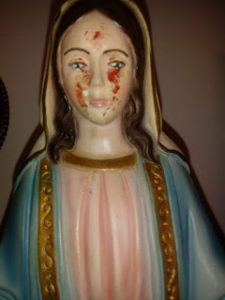 Thirdly, the messages have frequently been accompanied by visible phenomena, photographic evidence found in In Cammino con Maria, which cannot be the fruit of subjective imagination, notably the presence of the stigmata on Giselle’s body and and the appearance of crosses or religious texts in blood on Gisella’s arms. See the pictures taken from her apparition website
 Jennifer
 Why Manuela Strack?
 Why the Visionaries of Our Lady of Medjugorje?
 Why Pedro Regis?
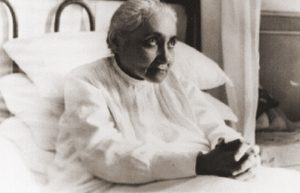 Why the Servant of God Luisa Piccarreta?
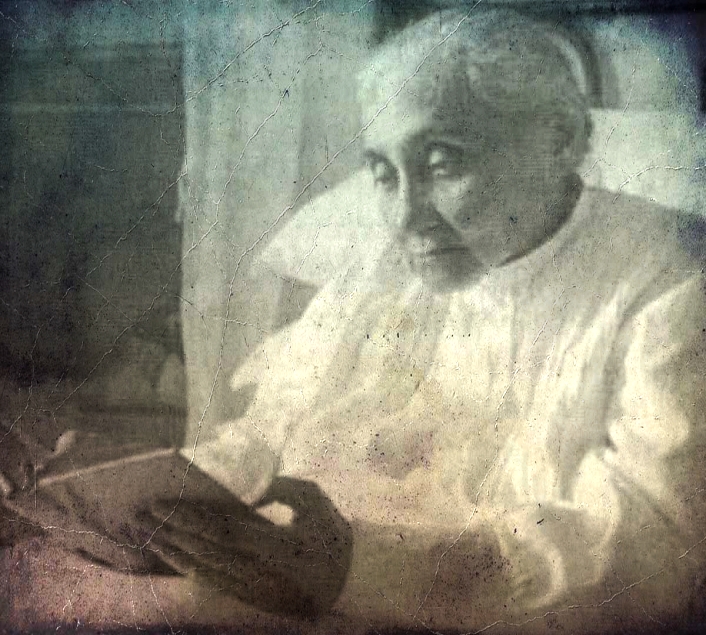 of the saints. It wasn’t until she became a “Daughter of Mary” that the nightmares finally ceased at the age of eleven. In the following year, Jesus began to speak interiorly to her especially after receiving Holy Communion. When she was thirteen, He appeared to her in a vision that she witnessed from the balcony of her home. There, in the street below, she saw a crowd and armed soldiers leading three prisoners; she recognized Jesus as one of them. When He arrived beneath her balcony, He raised his head and cried out: “Soul, help Me!” Deeply moved, Luisa offered herself from that day on as a victim soul in expiation for the sins of mankind.
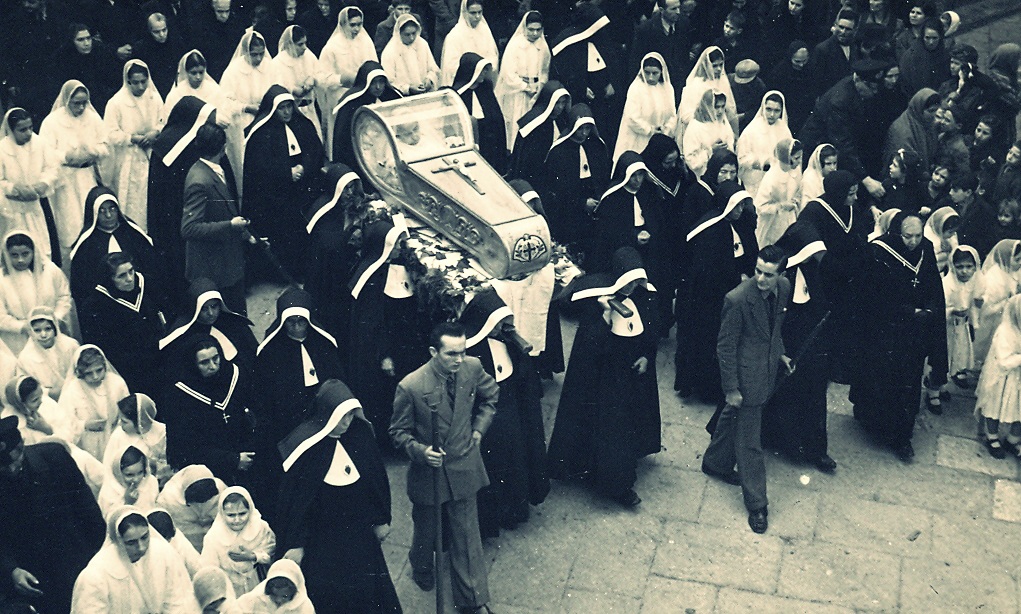 immobile, rigid-like state that appeared almost as if she were dead. It was only when a priest made the sign of the Cross over her body that Luisa regained her faculties. This remarkable mystical state persisted until her death in 1947—followed by a funeral that was no little affair. During that period in her life, she suffered no physical illness (until she succumbed to pneumonia at the end) and she never experienced bedsores, despite being confined to her little bed for sixty-four years.
 Why Simona and Angela?
 Valeria Copponi